
Starting a yoga routine often leads to changes you don’t expect. Movements begin to feel smoother, joints loosen up, and everyday stiffness gradually fades. This ancient practice does more than tone muscles; it supports better balance, protects the spine and joints, and helps the body move with greater ease.When flexibility and strength improve side by side, simple tasks like walking, bending, sitting, or lifting feel lighter and less exhausting.
Why Yoga Is Beginner-Friendly
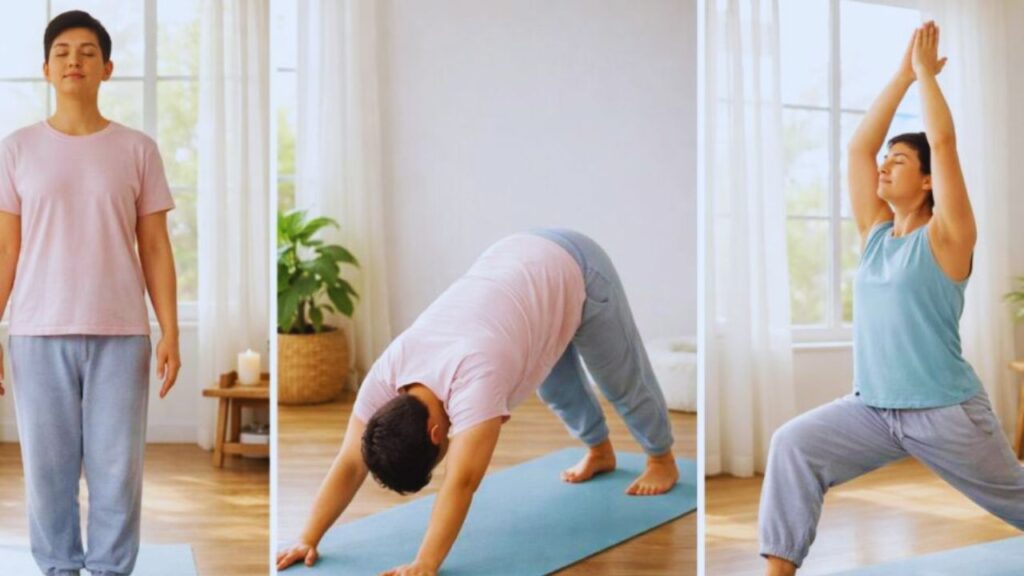
Yoga is especially suitable for beginners because it relies on body weight instead of equipment, allows steady progress, and can be adjusted for all fitness levels. With consistent practice, many beginners experience improved posture, less back discomfort, better balance, and greater muscle control within just a few weeks.
 Muscle Gains Aren’t Always Obvious These 10 Subtle Signs Show Your Training Is Actually Working
Safe Yoga Practice Tips for Beginners
Before beginning, it’s important to follow a few basic safety guidelines:

– Warm up the body for a few minutes before starting

– Move with slow, controlled motions
– Avoid forcing stretches; gentle tension is enough
– Maintain steady, natural breathing in every pose
– Use support like blocks, folded towels, or a chair when needed
Practicing yoga 2 to 4 times per week is sufficient for beginners to see noticeable progress without putting excess strain on the body.
 Plank Hold Timing Explained: How Long You Should Hold a Plank to Build Core Strength at Every Age
Best Yoga Poses for Beginners to Increase Strength and Flexibility
| Yoga Pose | Main Benefit | Body Areas Targeted | Beginner Hold Time |
|---|---|---|---|
| Mountain Pose | Posture & balance | Legs, core | 5–8 breaths |
| Cat-Cow | Spinal flexibility | Spine | 6–10 rounds |
| Downward Dog | Strength + stretch | Shoulders, legs | 15–30 seconds |
| Low Lunge | Hip flexibility | Hips, thighs | 15–30 seconds per side |
| Warrior II | Leg strength | Legs, hips | 20–40 seconds |
| Chair Pose | Lower-body strength | Thighs, core | 10–30 seconds |
| Bridge Pose | Glute strength | Glutes, back | 15–30 seconds |
| Plank Pose | Core strength | Core, arms | 10–30 seconds |
| Cobra Pose | Back strength | Spine, chest | 10–20 seconds |
| Child’s Pose | Recovery & stretch | Hips, back | 30–60 seconds |
Beginner Yoga Routine and Weekly Practice Plan
– Practice the complete routine 2 to 4 days per week
– On rest days, include light stretching or a short 5-minute flow
– Gradually increase pose hold times as strength and flexibility improve
Yoga is one of the safest and most effective ways for beginners to develop flexibility and strength at the same time.
By focusing on simple poses, proper alignment, and respecting physical limits, beginners can achieve stronger muscles, more mobile joints, and better posture.
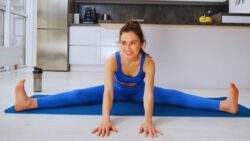
True progress comes from consistent practice, not pushing too hard. With patience and regular effort, yoga becomes a lasting habit that supports long-term physical health and everyday comfort.
