
If you’re tired of endless sit-ups and crunches, it’s time to switch things up. You can build a strong, stable core without ever getting on the floor. Standing core exercises target deeper muscles that support balance, posture, and everyday movement—while still delivering that familiar ab burn. When combined, these moves improve functional strength and coordination, helping you stay resilient and injury-resistant for years. Below are four beginner-friendly standing exercises that can light up your midsection in just minutes.
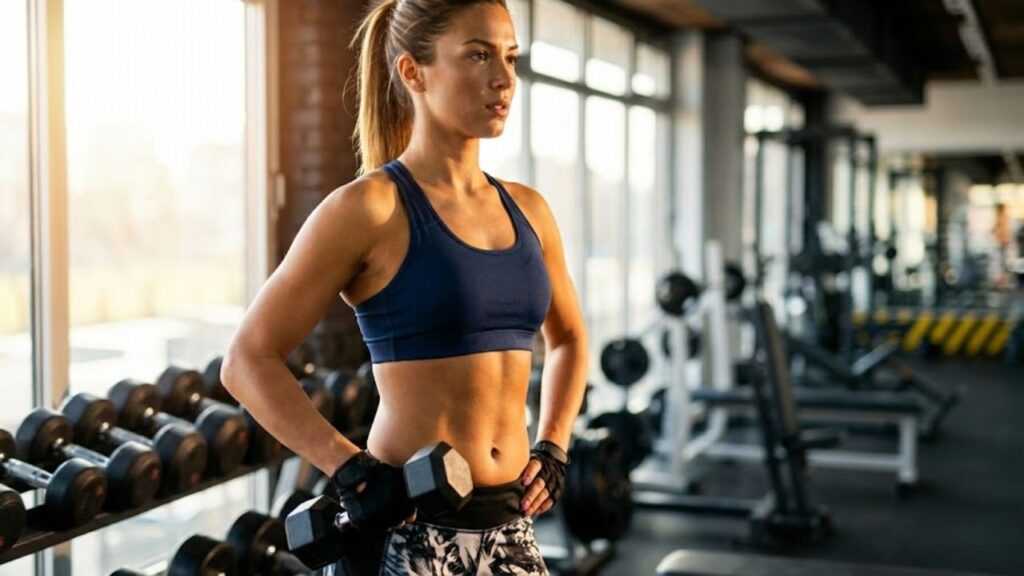
Why Standing Core Exercises Work
When you train standing up, your core works overtime to keep your body upright and stable. This activates not only the surface abs, but also the deeper stabilizing muscles that protect your spine and pelvis. These deep core muscles include the transverse abdominis, which wraps around your torso like a natural belt, the multifidus and erector spinae that support your spine, and the hip flexors that connect your core to your legs. Even your diaphragm and glutes play a role in true core strength. Training these muscles is known as functional training—it helps you move better in daily life, not just during workouts. That’s why standing core exercises are worth adding to your routine.
 Ditch the gym - this 20-minute standing workout builds full-body strength and muscle at home
1. Pallof Press
The Pallof press is an anti-rotation exercise designed to challenge your core’s ability to resist movement. This builds stability and control, which is especially useful for sports and everyday twisting motions. Attach a resistance band at chest height to a stable anchor point. Stand sideways to the anchor, hold the band close to your chest, and press it straight out in front of you. Your goal is to resist rotating toward the band. Slowly extend your arms, then bring the band back to your chest with control. Aim for 3–4 sets of 8–12 reps per side.
 Chair dip challenge after 55 signals elite upper-body strength if you keep perfect form throughout
2. Bear Hug Standing Russian Twists
By holding a weight close to your body, this exercise increases upper-body activation while keeping stress off your lower back. A kettlebell works well, but a dumbbell can also be used.
 Daily strength moves after 45 restore muscle faster than machines and boost posture and stamina
– Stand with feet shoulder-width apart and hug the weight close to your chest. With soft knees and a tight core, rotate your torso from left to right, letting your head and eyes follow the movement.
– You should feel your obliques engaging as you twist. Perform 3–4 sets of 20 total reps (10 per side). For a lighter option, use a resistance band with arms extended.
3. Overhead Farmer’s Walk
The overhead farmer’s walk looks simple, but it’s a demanding full-body exercise that heavily challenges your core. It builds shoulder stability, balance, and strong obliques through unilateral loading.
– Press a dumbbell overhead and keep your arm close to your ear. Stand tall and begin walking, focusing on keeping your torso upright without leaning.
 7 Simple Yoga Poses For Better Posture
– Walk for a set time or distance, then switch arms. Move slowly and stay in control—the goal is stability, not speed.
4. Windmills
Windmills are advanced but highly effective for building oblique strength and shoulder stability. Start light and progress gradually.
– Stand with feet wide and toes slightly turned out. Hold a dumbbell or kettlebell overhead with your left arm. Keeping your eyes on the weight, hinge sideways at the hips and slide your right hand down your right leg.
– Pause briefly near your ankle, then engage your core to return to standing.Complete6–8reps on one side before switching, aiming for 3–4 sets.
– This movement strengthens the waist, improves hip mobility, and stretches the hamstrings and inner thighs.
 Goodbye Hair Dye for Grey Hair: What to Add to Your Conditioner for Natural Colour Revival
Build Core Strength That Carries Into Daily Life
Standing core exercises train your body to move and stabilize the way it does in real life. By focusing on balance, control, and deep muscle engagement, these movements help you build lasting strength without relying on floor-based ab work. Add these exercises to your routine to develop a stronger, more functional core—no mat required.