
Starting a yoga practice can be one of the most rewarding steps toward better health and overall well-being. Whether you are completely new to yoga or returning after a break, beginning with simple and effective poses helps build a strong foundation. These six easy yoga poses are ideal for improving flexibility, developing strength, and calming the mind. They are perfect for beginners and for anyone who wants to maintain a balanced, sustainable yoga routine.
Mountain Pose (Tadasana)
Mountain Pose may appear simple, but it is the foundation of many standing yoga poses. This posture helps you develop balance, body awareness, and proper alignment, making it essential for building good posture and stability.

How to Do It:

– Stand tall with your feet together, heels slightly apart.
– Engage your thighs, lift your chest, and lengthen your spine.
– Keep your arms by your sides with palms facing forward.
– Breathe deeply while imagining a string gently pulling you upward.
Benefits:
– Improves posture.
– Increases body awareness.
– Strengthens legs and core.
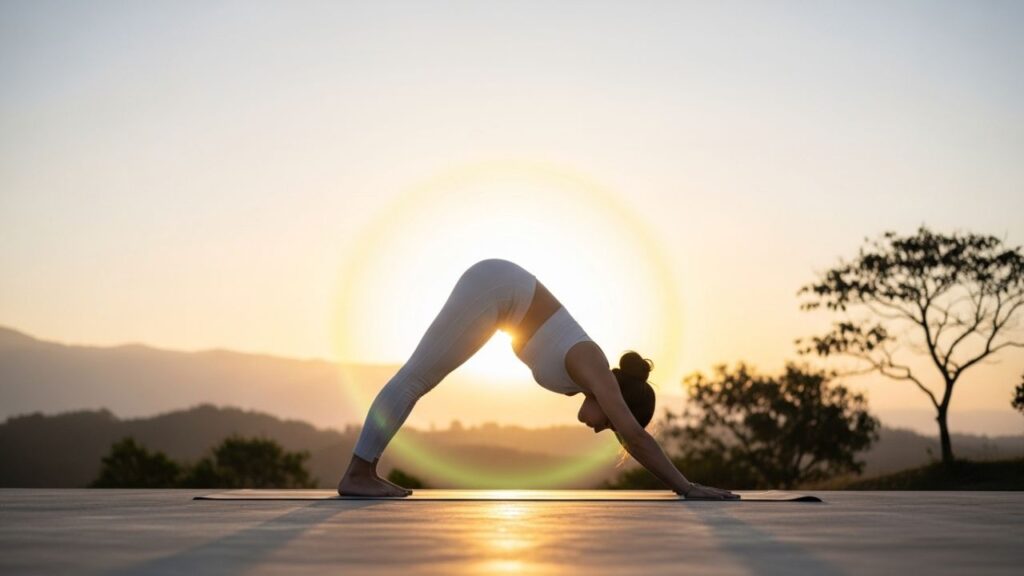
Downward-Facing Dog (Adho Mukha Svanasana)
This classic yoga pose provides a full-body stretch while building strength in the arms, legs, and core. It is commonly used during warm-ups, transitions, and cool-downs in yoga practice.
How to Do It:
– Begin on your hands and knees with wrists under shoulders and knees under hips.
– Lift your hips toward the ceiling, straightening your arms and legs.
– Press your heels toward the floor and draw your chest toward your thighs.
– Hold for several breaths, then gently return to the starting position.
Benefits:
– Stretches hamstrings, calves, and spine.
– Strengthens arms, shoulders, and legs.
– Relieves tension and improves circulation.
Cat-Cow Pose (Marjaryasana-Bitilasana)
Cat-Cow Pose is a gentle flowing movement that increases spinal flexibility and releases built-up tension. It also helps connect breath with movement, promoting relaxation and mindfulness.
How to Do It:
– Start on your hands and knees in a tabletop position.
– Inhale as you arch your back and lift your head and chest.
– Exhale as you round your spine and tuck your chin toward your chest.
– Continue flowing between these movements with your breath.
Benefits:
– Improves spinal flexibility.
– Relieves neck and back tension.
– Enhances breath awareness.
Child’s Pose (Balasana)
Child’s Pose is a deeply relaxing posture that gently stretches the back, hips, and thighs. It is often used as a resting pose during practice or at the end of a session.
 Forget vinegar and wax: the simple home trick that makes hardwood floors shine and look like new
How to Do It:
– Kneel on the floor with big toes touching and knees spread apart.
– Sit back on your heels and stretch your arms forward.
– Lower your forehead to the mat and relax your body.
– Breathe deeply and allow tension to melt away.
Benefits:
– Reduces stress and anxiety.
– Gently stretches the back, hips, and thighs.
– Encourages relaxation and mental clarity.
Tree Pose (Vrksasana)
Tree Pose is a balancing posture that strengthens the legs and improves focus. It also promotes body awareness and stability while encouraging calm concentration.
How to Do It:
– Begin standing in Mountain Pose.
– Shift your weight onto one leg.
– Place the sole of the opposite foot on the inner thigh, calf, or ankle.
– Bring your hands together at the chest or extend them overhead.
– Hold, breathe steadily, then switch sides.
Benefits:
– Improves balance and stability.
– Strengthens legs, ankles, and core.
– Enhances focus and concentration.
Seated Forward Fold (Paschimottanasana)
Seated Forward Fold is a calming stretch that targets the back, hamstrings, and calves. It is especially helpful for releasing physical tension and soothing the nervous system.
How to Do It:
– Sit on the floor with legs extended straight ahead.
– Inhale and lengthen your spine while raising your arms.
– Exhale and hinge forward from the hips.
– Reach toward your feet and relax into the stretch.
Benefits:
– Stretches the back, hamstrings, and calves.
– Calms the mind and reduces stress.
– Improves overall flexibility.
